Serving
All OCES Islands
Working Hours
Monday - Friday
8 am - 5 pm
Sat - Sunday & Public Holidays
Closed
Serving
All OCES Islands
Working Hours
Monday - Friday
8 am - 5 pm
Sat - Sunday & Public Holidays
Closed
Three weeks. That is roughly how long it takes for a part to be sourced, shipped, cleared through customs, and delivered to your island under normal conditions.
Three weeks of waiting. Three weeks of planning your repair around that delivery. Three weeks of telling your mechanic it will be ready soon.
And then it arrives — and it does not fit.
This is not a rare situation. It happens regularly to island vehicle owners across the OECS, and almost every time it happens the cause is the same. Not a careless supplier. Not a manufacturing defect. One piece of information that was either never asked for or never provided — and without it, the entire order was a guess from the beginning.
Why the same vehicle is not the same vehicle
This is the part of auto parts sourcing that most people never get told, and it is the root cause of more wrong deliveries than anything else.
Car manufacturers produce the same model across multiple years, multiple engine configurations, and sometimes across multiple production regions. The name on the vehicle is identical. The body shape is the same. But the mechanical components fitted underneath can be entirely different depending on which variant your specific vehicle is.
A Nissan AD Wagon is not one vehicle from a parts perspective. Depending on the production year and engine fitted, it could be running a QG15 or a QG18 engine — and those two engines do not share all the same components. A power steering pump sourced for one will not necessarily fit the other. The same principle applies across dozens of common OECS island vehicles. Mitsubishi L300 variants, Toyota Hilux generations, Suzuki Swift engine configurations — the model name alone tells a supplier very little about which specific components your vehicle actually needs.
When a supplier searches for your part using only the vehicle name and year, they are working with incomplete information. Sometimes they get it right. Often enough, they don’t. And on an island where a wrong delivery means starting the entire process over, often enough is not good enough.
The detail that changes everything
Your engine code is a short alphanumeric identifier — typically somewhere between three and six characters — that is stamped directly onto your engine block. It identifies your exact engine variant, not just the general model family. It is the reference that removes the guesswork entirely.
Common engine codes you will find across vehicles on the OECS islands include QG15, QG18, 4D56, 4G63, K12B, D13B, and 1NZ-FE among many others. Each one identifies a specific engine configuration with its own set of compatible components.
When a parts supplier has your engine code before placing an order, they are no longer guessing. They are cross-referencing your specific engine variant against a fitment database and confirming compatibility before anything moves. That is an entirely different level of accuracy than searching by vehicle name alone.
Where to find your engine code
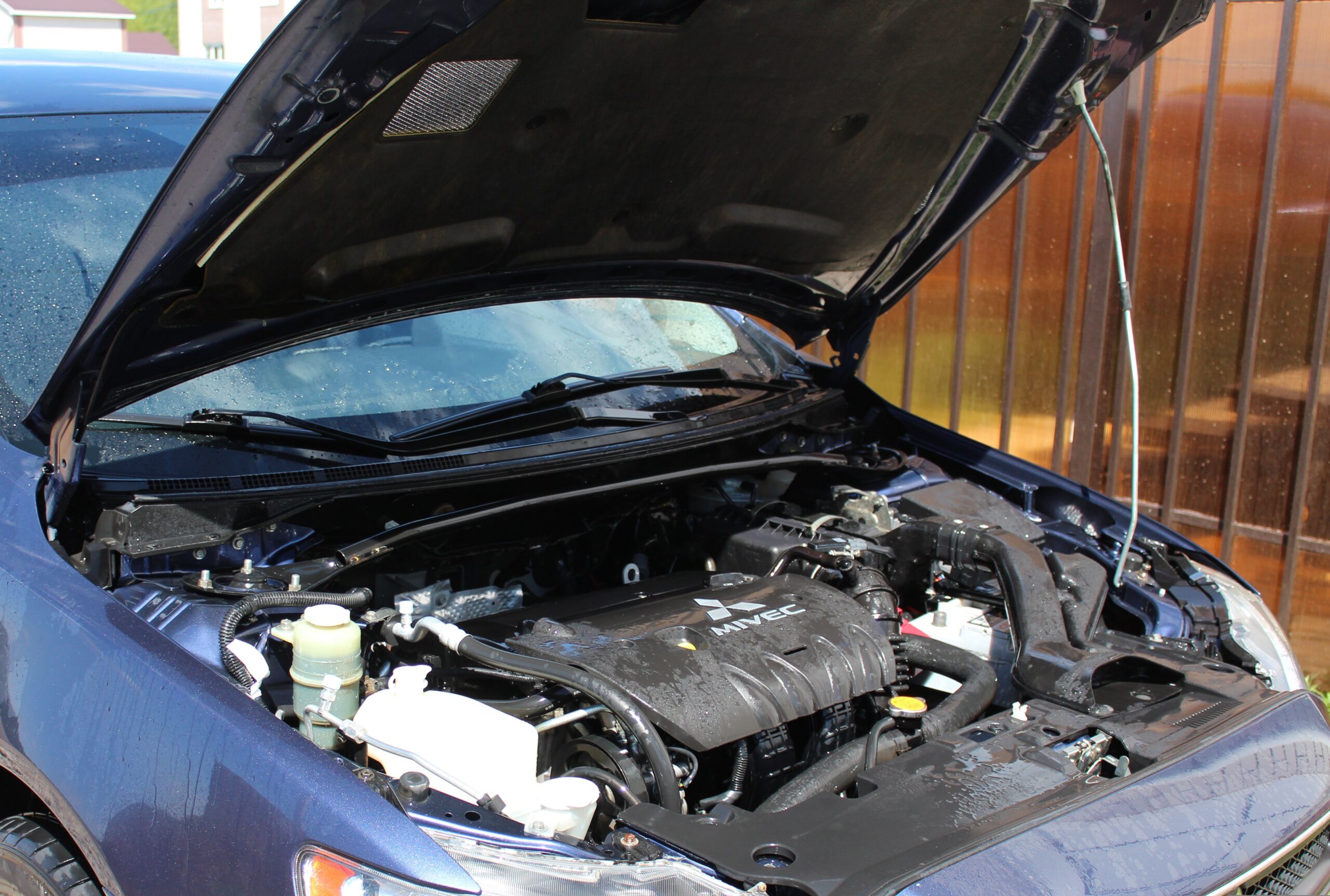
Your engine code is stamped on the engine block itself — not on a sticker on the bonnet, not on your vehicle registration document, on the metal of the block. It is typically located on the front face of the engine near the top, though the exact position varies by manufacturer.
The best way to find it is to open your bonnet, look directly at the engine block, and look for a stamped or cast alphanumeric code. Take a photograph of it when you find it. That photograph is worth keeping — you will use it every time you need to source a part.
If you cannot locate it yourself, any mechanic can identify it in under a minute. It is also recorded in your vehicle’s service manual if you have one.
What to include in every parts request
Beyond the engine code, a complete parts request should include your full vehicle make, model, and production year, the engine code, your delivery territory, and for components like suspension arms, brake calipers, or steering components — whether you need the left-hand or right-hand side. These details together give a supplier everything they need to source the correct part with confidence rather than probability.
A supplier who asks for all of this before placing your order is doing their job properly. That question — “what is your engine code?” — is not an inconvenience. It is the difference between a part that fits and a part that doesn’t.
Never source without it → Request Your Parts Quote Here!
